Available now
Transforms existing campus mobile devices into a mesh of gunfire detection network. By using multi-device verification to confirm and locate gunshots, the platform alerts family members while providing students with a one-tap “I’m Safe” check-in.
One sound, reaching each phone in turn. Two phones, fifteen metres apart, are enough. Every phone after that sharpens where it came from. A research prototype: no alert has yet come from a real gunshot — how it performs.
A phone in the room recognises gunfire on its own, as it happens. The rest of the day it sits quietly in the background. Nothing recorded. No audio sent.
A slammed door fools one phone. It rarely fools two, fifteen metres apart, in the same second.
Silent or locked, the alert is still sent. They tap once to say they are safe.
The network
Two phones, far enough apart, confirm an alert. Every phone after that widens the cover and tightens the answer.
Every alert needs two phones hearing the same thing in the same second.
Every phone that joins puts more of the building in range of the two an alert needs.
The more phones that hear it, the tighter the area on the map.
The family app · available now
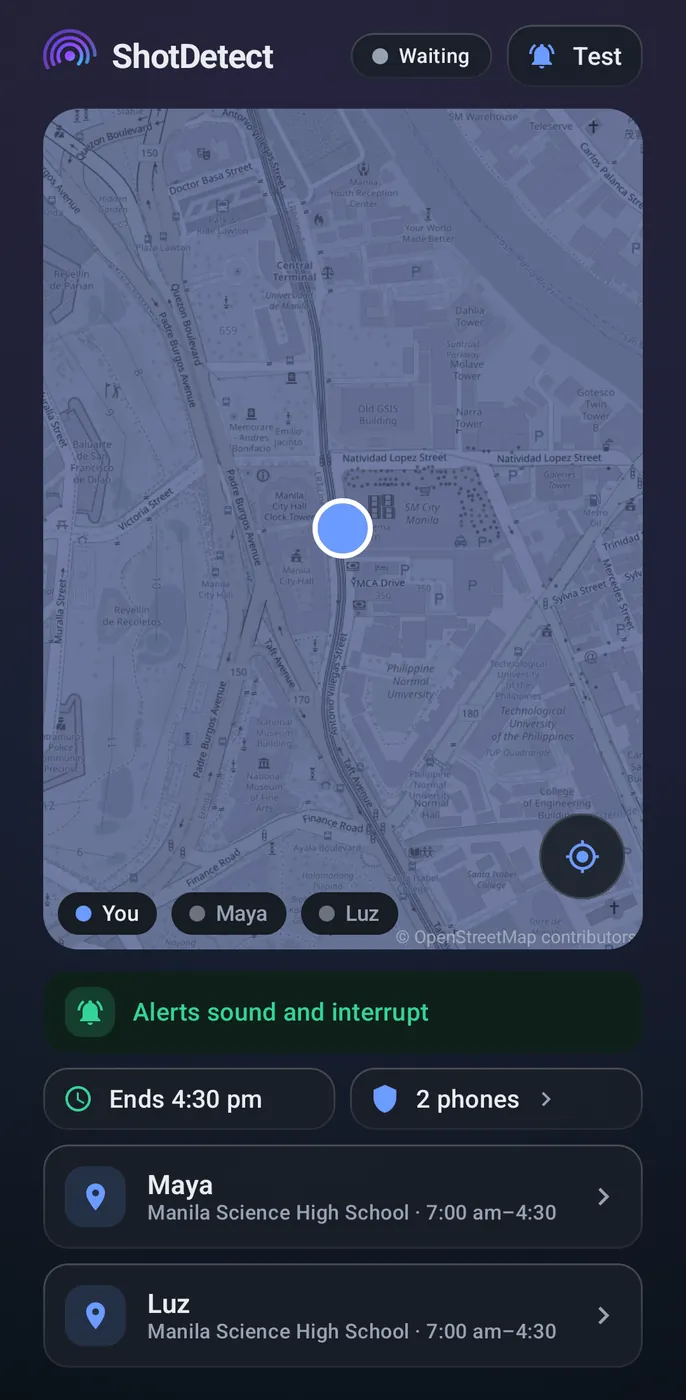
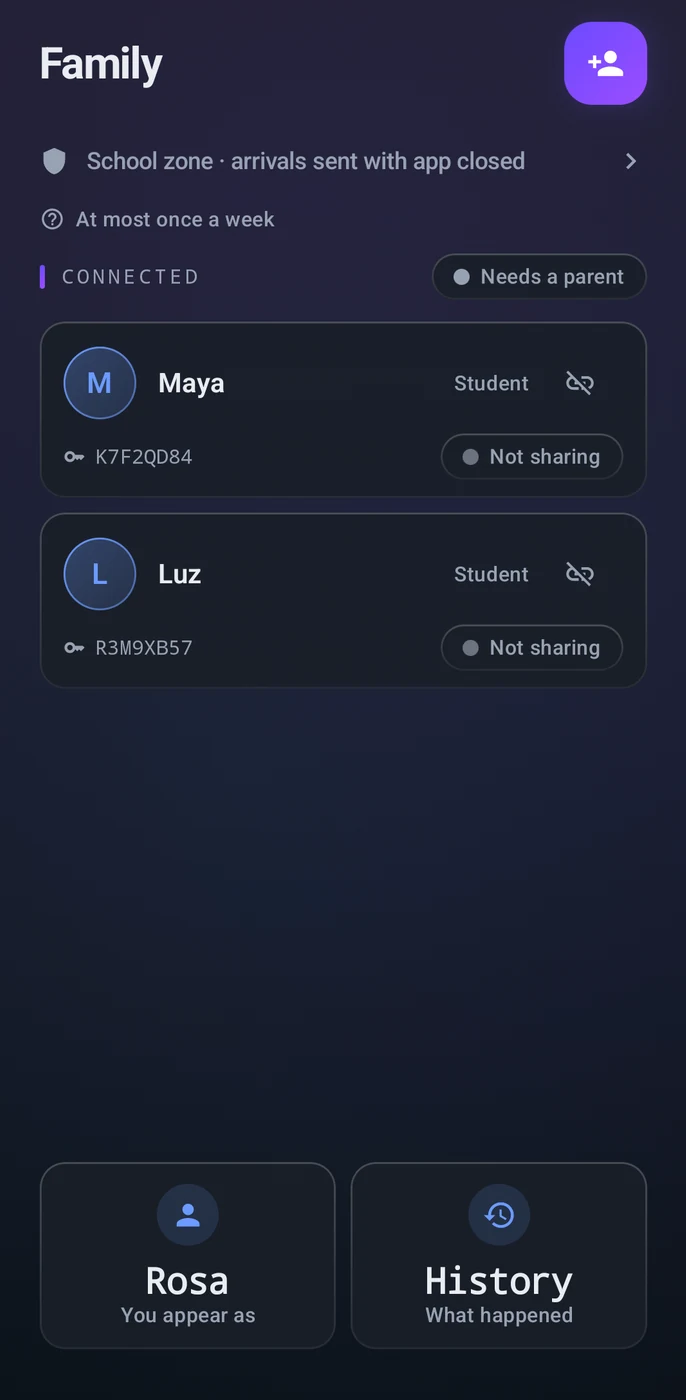
The smallest thing the network can carry is a pair. Set it up once: their school, their hours. Their phone listens and stays silent. Yours holds the map, and speaks only when phones agree.
One network, more than one job
None of this is particular to a school. The same network works wherever enough phones are in one place. All that changes is who gets woken.
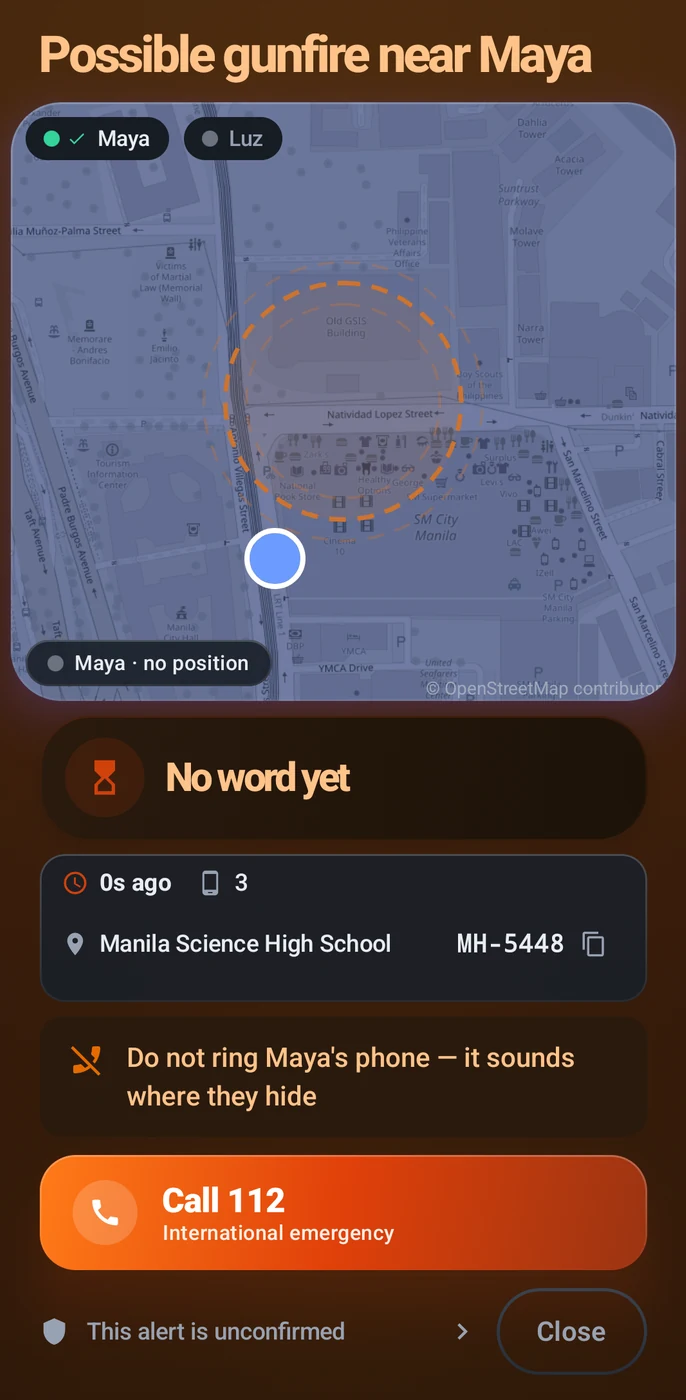
One guardian’s phone, one student’s, paired to each other and nobody else. Theirs listens through the hours you agreed, and stops when it leaves the school. Yours stays silent until phones agree, then wakes with the place and one tap back.
How an alert earns the word
The strongest check here is not a better model. It is one question, put to the people who were standing there, before anybody outside the room is told.
One phone can be fooled. Two, far apart and in the same second, far less easily.
Available nowEvery phone that heard it asks the person holding it one question. Only a person’s answer earns the word confirmed. Silence never cancels an alert — somebody hiding does not answer a prompt.
Available nowThe people in the room first. Then the phone outside the building. Nothing travels further unless a person there releases it.
Available nowThe family app runs all three today, between paired phones. The floor and the station are in development, and every measured figure is on how it performs.
Phones, not wall sensors
Privacy
The phones that agree never learn a name. Only a phone you paired can read where yours is.
Phones agree over tiny anonymous broadcasts: no audio, no names, rotating ids. The network never learns who anyone is.
The phone listens, decides, forgets. Nothing is written down. Nobody can play it back, us included.
No account. No contacts to hand over. What passes between your phone and theirs goes sealed through our relay, and only they can read it.
When you are ready
Two phones, one QR code, about a minute. No account.
Android 8 and up.